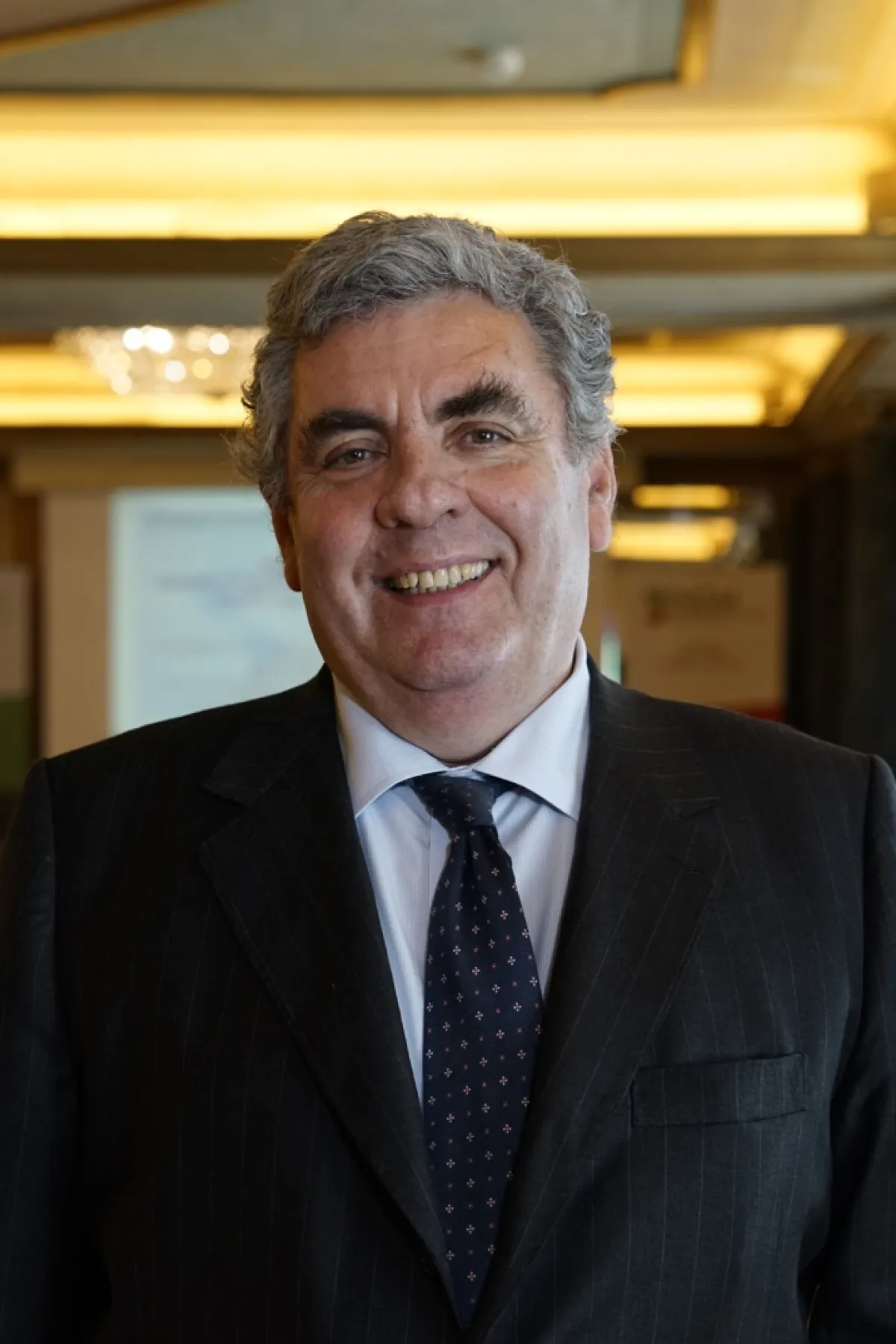
One example of Italian academic biomedical research finding an industrial outlet is the work of physician and immunologist Sergio Abrignani of the University of Milan and Director of INGM, the “Romeo ed Enrica Invernizzi” National Institute of Molecular Genetics, who founded the university spin-off CheckmAb together with molecular biologist Massimiliano Pagani of the University of Milan. In March 2023, the company granted Boehringer Ingelheim an exclusive licence for the clinical development and commercialisation of a monoclonal antibody against cancer. How do you achieve a result like that? We asked him.
Professor Abrignani, what has prevented Italian research, over time, from translating into an equally strong industrial base?
In the 1960s and 1970s, Italy was at the cutting edge. Farmitalia, a major European pharmaceutical company, developed adriamycin in Milan, the first cancer drug still used in clinical practice today. We lost that lead when Italian pharmaceutical companies ran into crisis and inadequate public intervention failed to revive them. From the 1980s onwards, Italian industry, not just pharmaceuticals, shrank in almost every sector where it had once been a leader. Today, apart from defence and energy, the country has no major global industrial players, only strong small and medium-sized enterprises. This directly limits its ability to support innovative research, which, to be competitive, requires the kind of heavy investment only foreign pharmaceutical multinationals can make. The result is a widening gap with the countries that invest most in innovation, particularly when it comes to research and development investment.
Can you put a figure on this investment gap?
The numbers speak for themselves. Italy invests 1.4% of GDP in R&D, against a European target of more than 3%. The United States invests 3.6%, Israel 6.8%, Germany 3.2% and France 2.3%. The gap in risk capital is even wider: we are third from bottom in Europe for venture capital invested per inhabitant, ahead only of Greece and Romania. In absolute terms, we attract around €1.2 billion a year, compared with €1.5 billion in Spain (40 million inhabitants against our 60 million) and €7.5 billion in France. When we compare these figures with the number of researchers in Italy and France – 160,000 and 300,000 respectively – the gap widens further: a French researcher attracts €25,000 a year, compared with €7,500 for an Italian researcher. That is thirteen times less than in the United States, where venture capital is estimated at USD 160 billion for one and a half million researchers. And yet, in terms of scientific quality measured by bibliometric indicators, Italy is on a par with France and Germany. What is missing, therefore, is an effective infrastructure for technology transfer from research.
This is the backdrop to the CheckmAb story, often cited as a rare Italian success. Can you walk us through the main stages?
It all started with a patent filed in 2016 together with Massimiliano Pagani, the University of Milan (Università Statale di Milano) and INGM. The underlying insight concerned a limitation of cancer immunotherapy. Current drugs act on the immune system throughout the body, not just in the tumour, and in around 10% of cases they cause autoimmune complications so severe that treatment has to be stopped. Our aim was to develop drugs that selectively target only the suppressor immune cells inside the tumour. We set up the start-up in 2018 with initial funding of around €6 million from Primo Capital, a venture capital fund backed by ENPAM (the Italian doctors’ pension fund). Later, while we were looking for further funding for the clinical phase, two major companies expressed interest in an exclusive licence. After six months of negotiation, in March 2023 we closed the deal with Boehringer Ingelheim: an upfront payment of just over €20 million, further milestone payments of up to €240 million in total, and a royalty of between 5% and 7% on future sales. The drug is now in clinical trials.
Why do you think this project found a genuine industrial outlet when so many others do not?
Three factors. The first is the team we recruited. The second is my career path: I joined academia after nineteen years of industrial research in Switzerland and the United States, which taught me the fundamentals of drug development, including in a start-up – skills that are rarely taught at Italian universities. After all, many projects arising from excellent research fail at the technology-transfer stage: science alone is not enough. Third, a bit of luck did the rest.
If you had to name Italy’s real structural weakness in this field in a single word, what would it be?
Technology transfer. That is the decisive bottleneck. The education system does not prepare researchers for entrepreneurship, and courses in medicine, biology and biotechnology often have no dedicated module. Technology transfer offices, now present in all IRCCS (research hospitals), universities and research centres, often lack the expertise to perform this role effectively. What is needed is hybrid training, combining science with economics and management, which is struggling to take hold in Italy. At universities in English-speaking countries, staff in these offices are among the best paid because they generate up to 30% of the institution’s budget through patents, licences, spin-offs and royalties. In Italy, by contrast, this contribution to institutional budgets is negligible.
What should the priorities be to change course?
We need to attract this expertise from abroad, as we would for any specialism missing from a health system. If a hospital lacks neurosurgeons, you do not hand the operation to an immunologist; you hire qualified neurosurgeons. The same applies here. We need qualified professionals with concrete, demonstrable results, not simply willing staff who lack the fundamentals of the profession. There are Italians working abroad in this field, and attracting them requires internationally competitive pay.
Finally, can Italy catch up on technology transfer?
I am convinced it can. The public investments made so far have been significant: without them, our European ranking for venture capital per inhabitant would probably be worse, but they are not enough on their own. We need targeted investment in training and in technology transfer professionals. Italy has already shown in other fields that a sector lagging behind can catch up. The automotive industry, for example, lost its mass-market volumes but built an internationally renowned niche in high-performance cars between Modena and Reggio Emilia, proof that a competitive ecosystem can be created even from a small base if you invest in the right direction. In pharma and biotech, the recipe is just as clear, even if more difficult to implement. But we know where to act, and that is already a significant achievement. What is needed now is the will to select those who are genuinely capable of putting it into practice.
Sergio Abrignani is a physician and immunologist with a career spanning more than 40 years in industrial and academic research. He is Full Professor of Immunology and Immunopathology at the University of Milan (Università degli Studi di Milano) and Founding Director of INGM, the “Romeo ed Enrica Invernizzi” National Institute of Molecular Genetics (Istituto Nazionale di Genetica Molecolare). He has made important contributions to the study of HCV, T lymphocytes and cancer immunotherapy. He has also founded two start-ups developing new cancer immunotherapies.